Rangers Penalties: Do the Stats Reveal a Bias in Scottish Football?
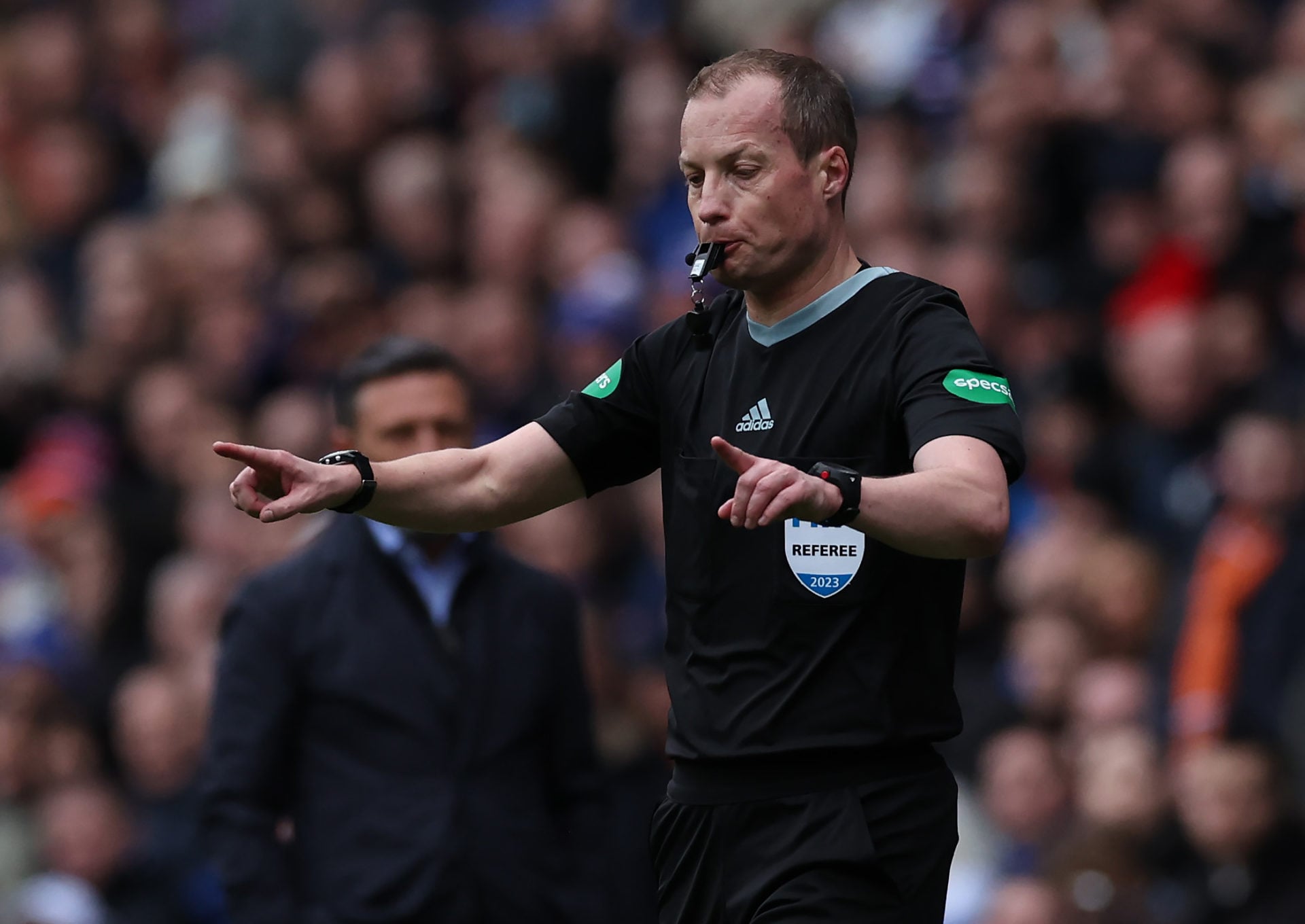
The debate over refereeing decisions and perceived bias is a constant undercurrent in Scottish football, often reaching fever pitch, particularly when it involves the Old Firm. For years, anecdotal evidence and passionate fan discussions have fueled the notion that certain teams, notably Rangers, receive a disproportionate number of penalty awards. But does hard data support these claims, or are they merely the product of fervent partisan support?
Recent statistical analysis, spanning four seasons from 2020/21 to 2023/24, provides a compelling dataset that offers a deeper look into this contentious issue. By examining the sheer volume of penalties awarded, we can begin to explore whether the numbers truly hint at a systemic bias or if there are other footballing explanations at play. This article will delve into these figures, drawing comparisons across the league and considering the impact of VAR, to determine if there's substance to the whispers of an unfair advantage regarding Rangers VAR comparison with other clubs.
Unpacking the Numbers: A Four-Season Penalty Deep Dive
To move beyond mere speculation, an analysis of penalty awards over several seasons is crucial. The data from 2020/21 to 2023/24 presents a striking picture:
Total Penalties Over 4 Seasons (2020/21–2023/24):
- Rangers: 37 penalties (Average: 9.25 per season)
- Celtic: 22 penalties (Average: 5.50 per season)
- Hearts: 21 penalties (Average: 7.00 per season - *Note: Average based on 3 seasons, assuming presence in top flight for 3 seasons of the 4-year period for consistency with provided average*)
- Aberdeen: 19 penalties (Average: 4.75 per season)
- Hibs: 18 penalties (Average: 4.50 per season)
- Kilmarnock: 18 penalties (Average: 6.00 per season - *Note: Average based on 3 seasons*)
- St Mirren: 16 penalties (Average: 4.00 per season)
- Motherwell: 15 penalties (Average: 3.75 per season)
- St Johnstone: 14 penalties (Average: 3.5 per season)
- Ross County: 10 penalties (Average: 2.50 per season)
- Livingston: 8 penalties (Average: 2.00 per season)
- Dundee United: 6 penalties (Average: 2.00 per season)
The most immediate and striking insight from these figures is Rangers' clear lead. With 37 penalties awarded over four seasons, averaging 9.25 per campaign, they stand significantly ahead of every other team in the league. This total is 15 more than their Old Firm rivals, Celtic, who accumulated 22. Outside the Glasgow giants, the highest non-Old Firm total belongs to Hearts with 21 (though their average is calculated over fewer seasons in the top flight), followed by Aberdeen with 19.
While Rangers consistently lead, it's important to note an anomaly: in the 2022/23 season, Hearts actually edged out Rangers in penalty awards, 11 to 10. This specific season provides a valuable counterpoint to the overall trend. Generally, the league sees around 70-80 penalties awarded each season, with VAR's introduction in 2022/23 slightly increasing the overall number of awards.
This data does indeed "back up the general notion that Rangers might have a tendency to get more penalty calls than other clubs in the league," as one analysis suggests. For a more granular breakdown of these staggering statistics, you can refer to our detailed article: Rangers Penalty Dominance: Unpacking 4 Seasons of Staggering Stats.
Beyond the Raw Data: Interpreting the 'Bias' Question
When presented with such a disproportionate trend, particularly one that is consistent over several seasons, it's "certainly reasonable to question the existence of bias." The statistics alone do not definitively prove conscious or unconscious bias, but they undeniably fuel perceptions and accusations within the football community.
However, several factors could contribute to such a statistical pattern beyond mere bias:
- Playing Style and Dominance: Top teams like Rangers typically dominate possession, spend more time in the opposition's penalty area, and create more attacking opportunities. More time in dangerous areas naturally increases the likelihood of contact, fouls, and potential penalty incidents.
- Player Quality: Highly skilled attackers are often adept at drawing fouls, either through quick footwork, body positioning, or attacking directness. Rangers, as one of the league's dominant teams, possesses a roster of players capable of exploiting defensive weaknesses.
- High Stakes: Every decision in an Old Firm game or a crucial title decider is magnified. While referees strive for impartiality, the pressure of such matches can be immense.
- The 'Big Club' Theory: A long-standing, often debated theory suggests that referees, consciously or unconsciously, may favor bigger clubs due to the pressure, crowd influence, or perceived importance of their matches. This isn't unique to Scottish football but a global discussion point.
While these alternative explanations exist, the sheer consistency of Rangers' penalty count relative to other teams, including Celtic, makes the statistical anomaly difficult to ignore. The debate then shifts from 'do they get more?' to 'why do they get more?', and whether the reasons are purely football-related or influenced by other dynamics.
The VAR Factor and Old Firm Dynamics: More Fuel for the Fire
The introduction of Video Assistant Referee (VAR) in Scottish football during the 2022/23 season was intended to bring greater accuracy and consistency to decision-making. However, it has arguably intensified, rather than quelled, debates over fairness. The primary keyword, rangers var comparison, becomes particularly relevant here, as fans and pundits seek to understand how VAR has impacted penalty awards for Rangers compared to others.
The context surrounding Rangers' official complaint to the Scottish Football Association (SFA) regarding "inconsistency of decisions" and a "pattern of inconsistency when playing Celtic" perfectly illustrates the ongoing tension. This complaint stemmed from a Scottish League Cup semi-final loss to Celtic, where a Celtic player remained on the field after a challenge similar to one that saw an opposing player dismissed earlier in the game. This incident, and others like it, highlights how VAR, despite its objective, can still be perceived as inconsistent, especially when Old Firm rivals are involved.
Rangers legend, Ally McCoist, and former player Andy Halliday have publicly echoed calls for greater transparency, drawing parallels to the higher standards of officiating seen in leagues like the EPL. This desire for clarity and accountability is central to restoring faith in the system, particularly when the penalty statistics present such a one-sided picture. A thorough rangers var comparison of contentious decisions against other clubs' incidents could shed more light on the actual application of VAR protocols.
The question isn't just about the number of penalties, but the legitimacy and consistency of the decisions that lead to them. If Rangers feel they are on the receiving end of inconsistent VAR calls against Celtic, and the statistics suggest they receive significantly more penalties overall, it creates a complex narrative ripe for scrutiny. For further details on Rangers' push for transparency, see: Rangers Demand VAR Transparency Amidst Old Firm Inconsistency Complaints.
Actionable Insights and Moving Forward
The statistics present a clear pattern that demands attention and analysis. For Scottish football to uphold its integrity and maintain fan trust, several steps could be considered:
- Enhanced Transparency: The SFA and refereeing bodies could provide more detailed post-match explanations for key VAR decisions, particularly those involving penalties. This includes releasing audio from VAR checks where appropriate, similar to practices in other leagues.
- Independent Review Panels: Regular, independent review of contentious decisions and overall refereeing performance could help identify systemic issues or areas for improvement.
- Referee Development and Consistency Training: Continuous professional development for referees, focusing on consistent application of laws and VAR protocols across all games, regardless of the teams involved.
- Data-Driven Analysis: Clubs, media, and fans should continue to use data to inform discussions, moving beyond anecdotal evidence. However, it's crucial to interpret data with context, considering factors like playing style and game dominance.
- Constructive Dialogue: All stakeholders—clubs, SFA, media, and fan groups—must engage in respectful, constructive dialogue to address concerns rather than allowing them to fester and erode trust.
The perception of fairness is almost as important as fairness itself in sport. When one club consistently receives a significantly higher number of penalty awards, as the rangers var comparison data suggests, it inevitably raises questions that need to be addressed openly and objectively.
Conclusion
The statistical evidence gathered over four seasons clearly indicates that Rangers have been awarded significantly more penalties than any other team in Scottish football, including their Old Firm rivals. While the numbers alone don't offer conclusive proof of intentional bias, they certainly provide a strong foundation for the pervasive questions and debates surrounding refereeing impartiality. The introduction of VAR, intended to eliminate controversy, has instead become another focal point for accusations of inconsistency, particularly in high-stakes Old Firm encounters. For the health and credibility of Scottish football, it is imperative for governing bodies to embrace greater transparency, encourage consistent officiating, and engage in open dialogue to ensure that every decision, whether on the pitch or in the VAR booth, is perceived as fair and unbiased by all.